The problem I wanted to solve
I use multiple large language models and found that useful business context could become fragmented between tools. Moving a project from one assistant to another often meant repeating background or reconstructing decisions.
I built AI Passport to explore a simple idea: keep important context in a place I control, then choose what to share with whichever AI tool I am using.
How the product works
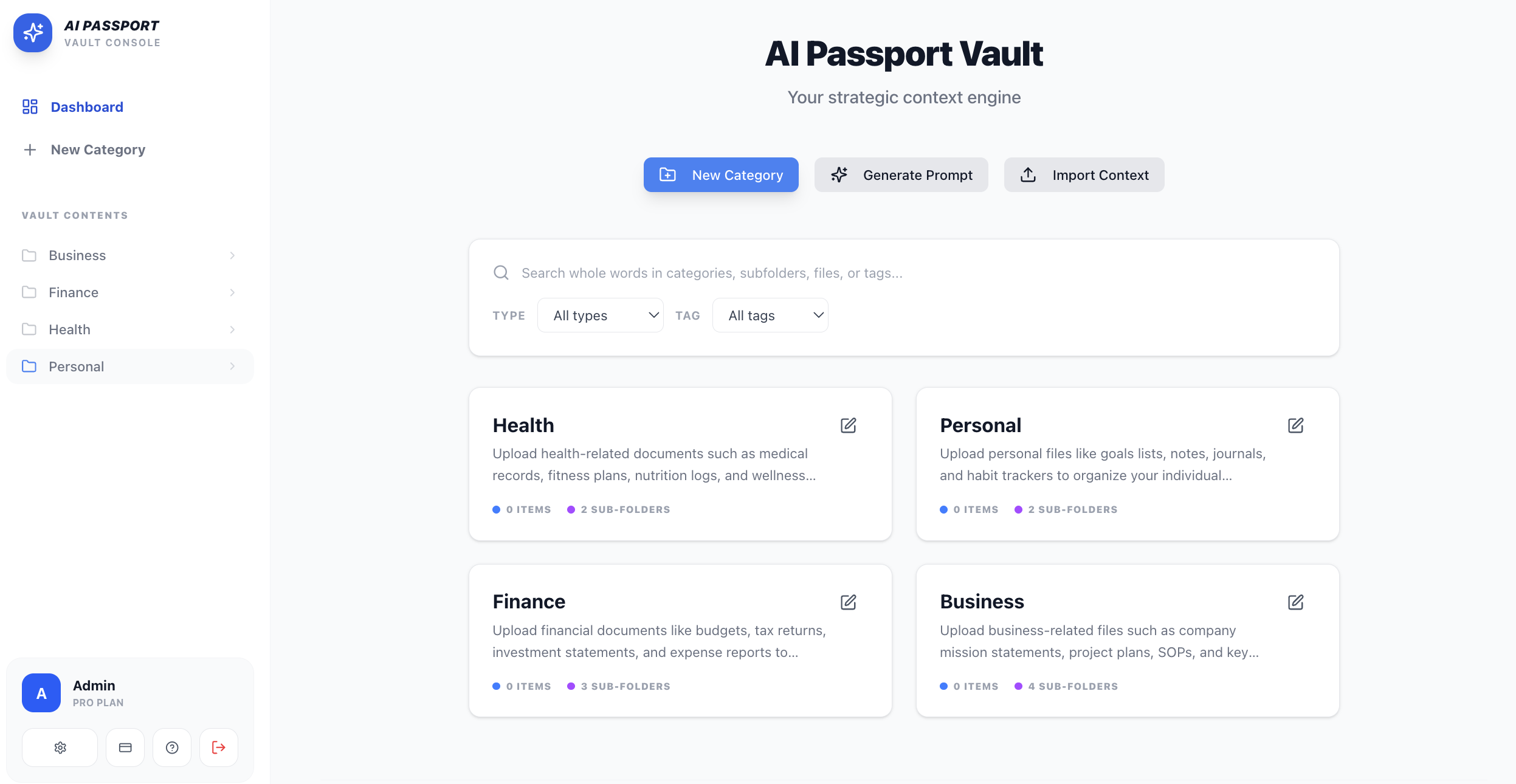
AI Passport organizes context into a structured vault. People can group information with categories and subfolders, mark its relative importance, and prepare selected material for use elsewhere.
- Organize context into files, categories, and nested folders
- Rank information by importance
- Export selected context in formats such as Markdown or JSON
- Bring updated context back into the vault and review proposed changes
- Use templates to create a more consistent starting structure
The product is intended to make context portable without treating every connected model as the permanent home for that information.
What I built
I owned the product concept and application build, including the vault organization and context-sharing flow. The app uses Svelte and TypeScript with Supabase for its backend.
The design boundary
The vault is the place where context is organized. Sharing is a separate action: a person selects what is relevant, exports it for a task, and reviews proposed changes before applying them. That distinction is central to the product's approach to portability and control.
What shipped
The live product supports organizing a vault, exporting selected context, and reviewing proposed updates before they are saved. The user controls what is shared with an external AI tool.